Buying commercial rental scooters in Canada: brands, rules, and what to check
How to choose sharing-grade e-scooters for a Canadian rental fleet: what federal and provincial rules say about speed, which safety certifications to ask for, and how Segway and OKAI fleet models compare.
We run a shared e-scooter fleet, so we look at rental scooters the way an operator does: by what they cost to keep on the street, not by the spec sheet alone. Whether you are starting a scooter rental business anywhere in Canada, adding scooters to an existing fleet, or thinking about a franchise, these are the checks we would make before you sign a purchase order.
Buy commercial-grade, not consumer-grade
This is the most important decision you will make. A scooter from a big-box store is built for one owner. A rental scooter is ridden by many people every day, parked outside, and handled by a crew that swaps batteries and moves it around. Consumer models wear out too quickly in that kind of use.
Commercial, or sharing-grade, scooters are designed for that job. They ship with a built-in IoT module for GPS, locking, and app unlocking, a battery your crew can swap on the street, puncture-resistant tires, and parts you can replace in minutes. Both makers in our comparison below sell dedicated sharing models with these features.
Questions to ask any seller:
- Is this model built and sold for shared fleets, or is it a consumer scooter with a lock added?
- Does it ship with an IoT module, or do you have to buy and fit one?
- Which operators already run this model?
Is there a federal 25 km/h speed limit?
No. A common belief is that Ottawa caps e-scooters at 25 km/h, but we could not find a federal speed limit for e-scooters. Transport Canada explains that lower-speed vehicles such as power-assisted bicycles and scooters fall under provincial or territorial jurisdiction, and that provinces and territories decide whether to allow them and under what conditions. The 25 km/h figure comes from provincial and municipal rules, and it is not the same everywhere.
Provinces and cities set the rules
A few examples show how much the rules vary:
- Ontario: Under the provincial pilot, an e-scooter's motor may not exceed 500 W and may provide a maximum speed of 24 km/h. The scooter can weigh at most 45 kg. The pilot runs until November 27, 2029, and a municipality must pass a bylaw before e-scooters can be used on its roads.
- British Columbia: Under the Electric Kick Scooter Pilot Project Regulation, the motor may not propel the scooter faster than 25 km/h on a level surface. Continuous motor power is capped at 500 W and weight at 45 kg. E-scooters are allowed only in participating communities, and the pilot runs from April 5, 2024, to April 5, 2028.
- Quebec: The motor must stop assisting at 25 km/h or less, and the scooter can weigh at most 36 kg, battery included. In July 2026, Quebec extended its pilot to July 20, 2028, and announced that the 500 W power limit is being removed.
- Nova Scotia: The Motor Vehicle Act sets a general e-scooter limit of 32 km/h on municipal roads, and municipalities can set lower limits. Halifax caps e-scooters at 25 km/h on roads and in bike lanes, and at 15 km/h on multi-use pathways.
- Alberta: In Calgary, shared e-scooters are limited to 20 km/h, and they slow automatically to 15 km/h in busy pedestrian areas.
For a buyer, the lesson is simple: a scooter that tops out at 25 km/h is not automatically legal everywhere. In Ontario, for example, it would need to be capped at 24 km/h, and Calgary's shared fleet runs at 20 km/h. Ask whether you can set top speed by market and by zone, and check weight against the strictest province you plan to serve. Before you launch in any city, read its own bylaw.
Ask for safety certification
Health Canada and Transport Canada recommend that e-mobility devices and their batteries comply with ANSI/CAN/UL 2272, the standard for the electrical systems of personal e-mobility devices. This is a recommendation, not a federal requirement. Health Canada also states that Canada currently has no specific regulatory requirements for lithium-ion batteries, and it consulted on possible mandatory rules from December 2025 to February 2026.
That makes your own checks more important. Ask the seller for:
- UL 2272 certification documents for the exact scooter model, or the standard it was tested to instead
- Battery certifications. Segway, for example, lists UL 2271 and UN 38.3 among the certifications for its sharing batteries.
- Chargers with a Canadian certification mark such as CSA, cUL, or cETL. Health Canada recommends using a charger that carries one.
- Replacement batteries from the original manufacturer. Health Canada warns against modified or homemade battery packs.
None of the four product pages in our comparison states a UL 2272 listing for the complete scooter, so ask for the documents.
Commercial scooter brands worth a look
Segway and OKAI are two established makers that sell e-scooters built for sharing fleets and publish detailed product pages for them. iRoll sells Segway scooters, so we want to be clear: both brands build for fleets, and the right choice depends on your software, your parts plan, and your local rules. The figures below come from each maker's own product page. Treat range as a manufacturer claim.
Segway Max S90L
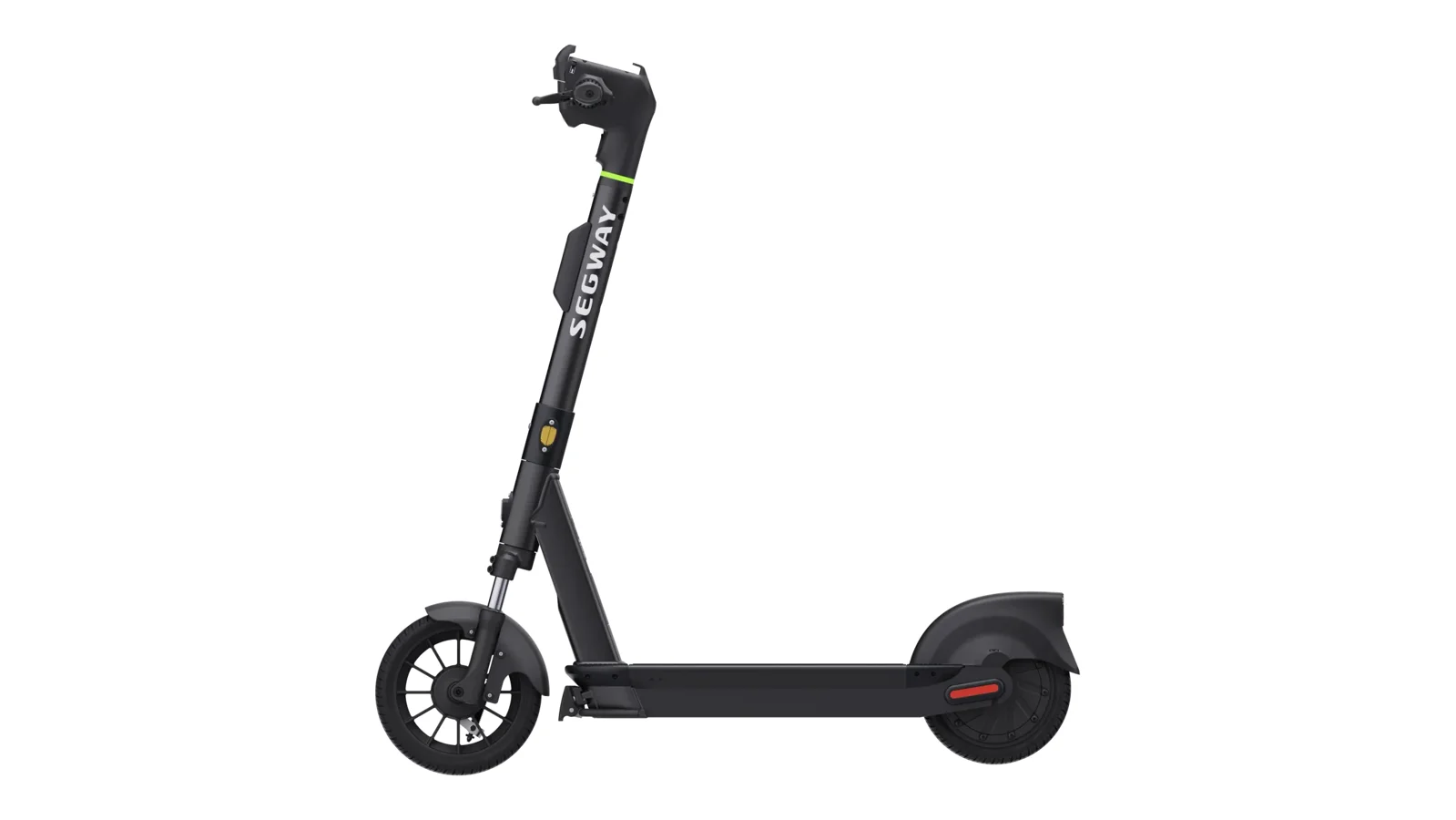
Image: Segway Commercial
Segway calls the S90L the flagship of its Max series for sharing. Segway lists an optional Segway Pilot Lite system that detects pedestrians and sidewalks and can slow the scooter down. It also lists tandem-riding detection and states that consumable parts such as grips, brake levers, and the throttle can be replaced in under 6 minutes.
Segway Max Plus X
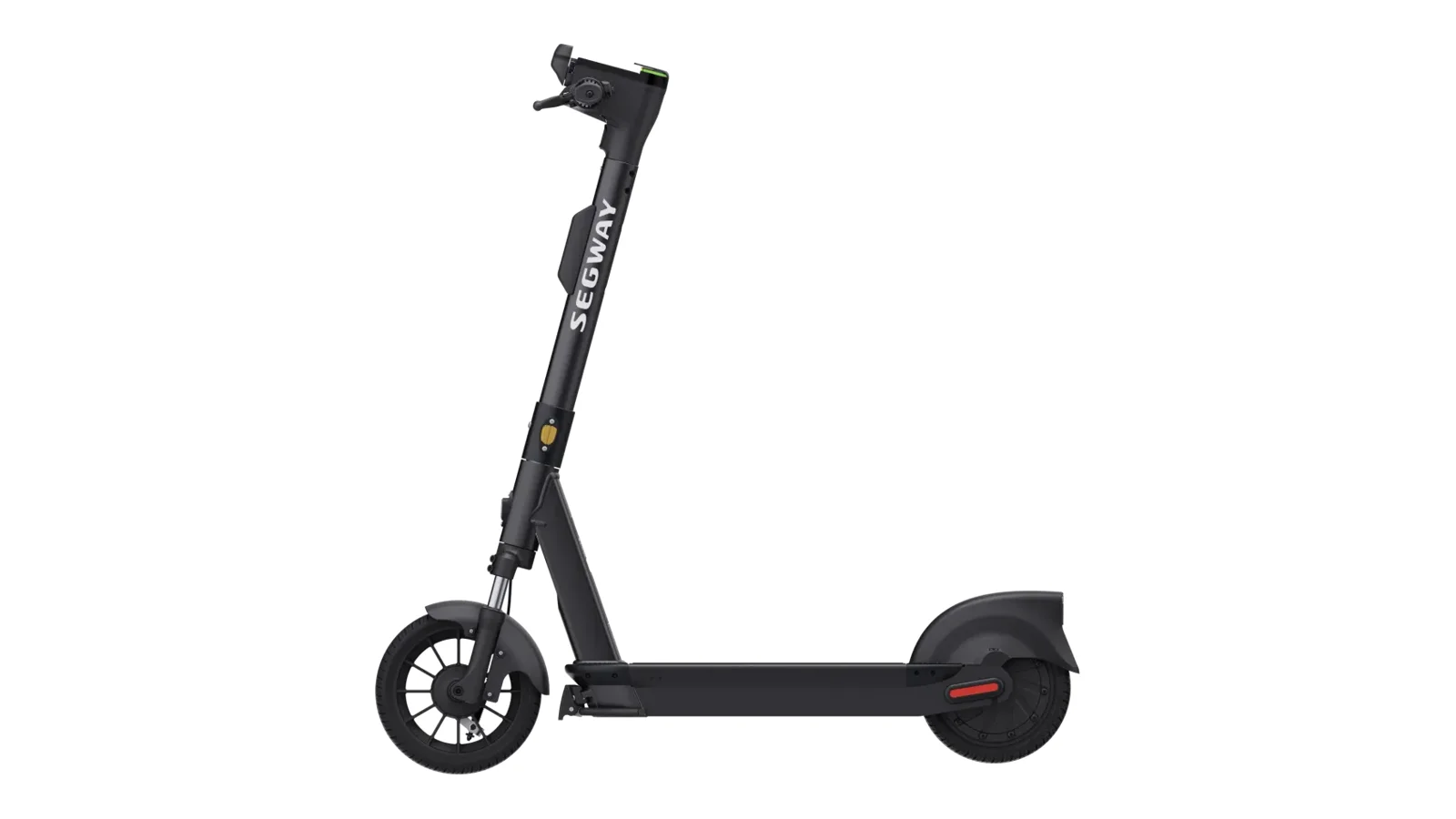
Image: Segway Commercial
The Max Plus X shares about 73% of its components with the S90L, including the battery, motor, controller, and IoT, according to Segway. That matters if you run both models, because one parts shelf can serve the whole fleet.
OKAI ES400A V2
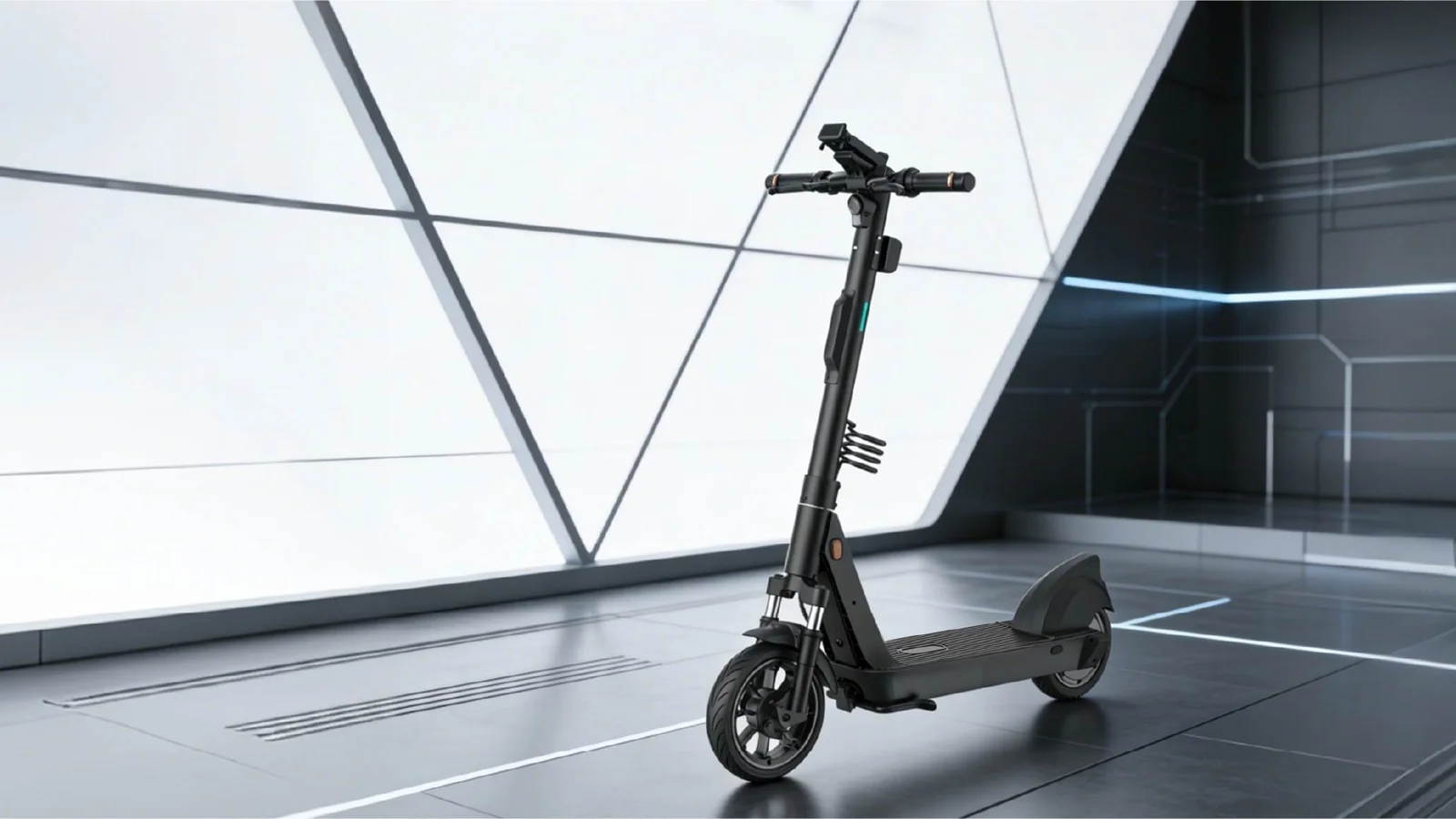
Image: OKAI
OKAI describes the ES400A V2 as its latest model for the e-scooter sharing market, with a swappable battery pack and 4G IoT. It offers two battery options with different cell suppliers.
OKAI ES410
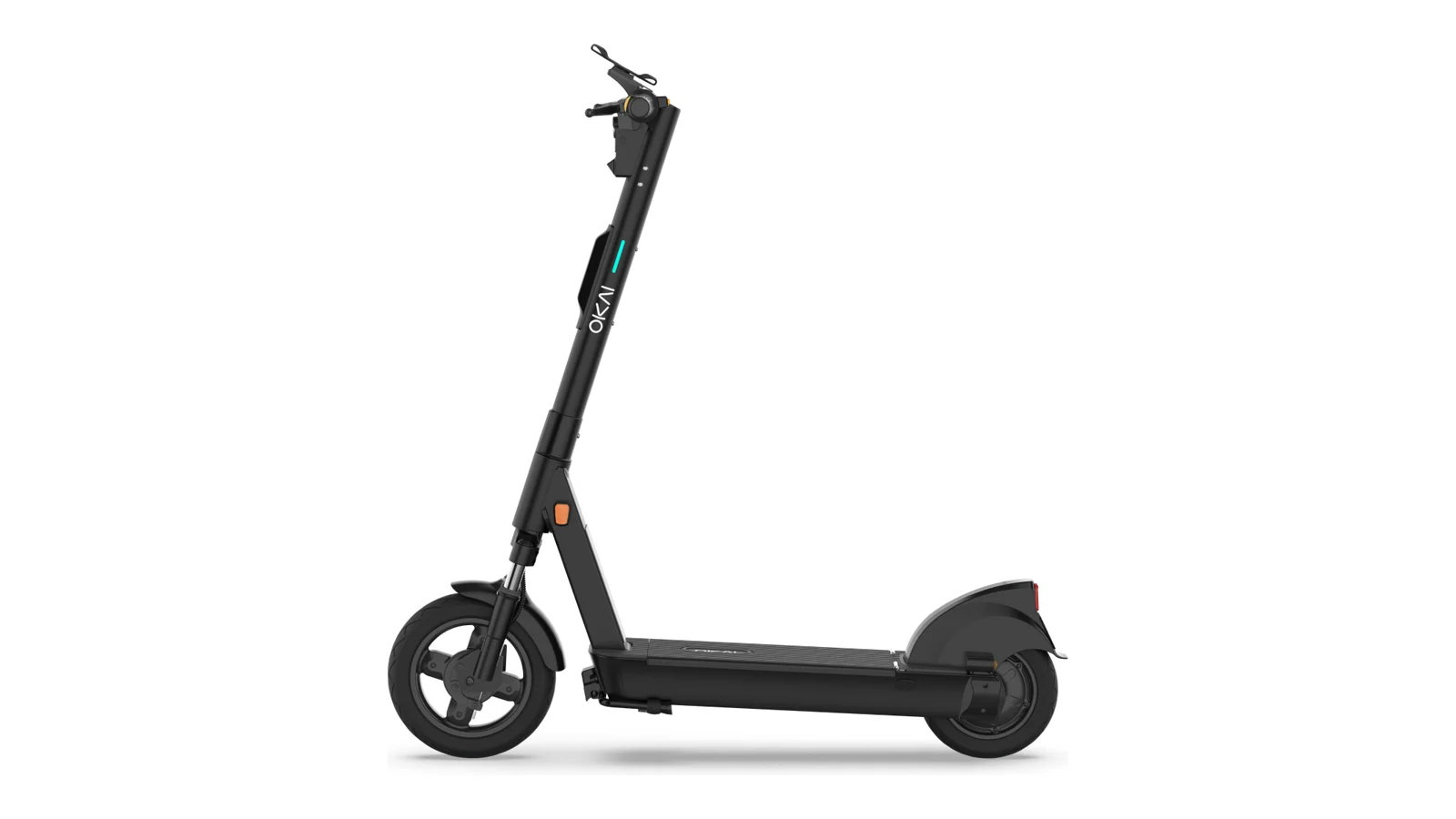
Image: OKAI
OKAI lists camera-based obstacle collision detection on the ES410. Above 15 km/h, the dashboard shows danger, warning, and attention alerts when an object appears in front of the scooter.
Side-by-side comparison
| Spec | Segway Max S90L | Segway Max Plus X | OKAI ES400A V2 | OKAI ES410 |
|---|---|---|---|---|
| Top speed (listed) | 25 km/h | 25 km/h | 25 km/h | 25 km/h |
| Battery | 36 V, 551 or 1,033 Wh | 36 V, 551 or 1,033 Wh | 48 V 744 Wh or 47 V 611 Wh | 48 V, 744 Wh |
| Range (maker's claim) | 44 km / 80 km | 39 km / 70+ km | 60 km / 50 km | Up to 60 km |
| Rated motor power | 400 W | 400 W (750 W max) | 450 W (800 W max) | 350 W (700 W max) |
| Weight | 30 kg | About 31 kg | 30 kg | 30 kg |
| Water rating | IoT module IPX7 | Battery, controller, motor, dashboard IPX7 | Not published | Vehicle IPX5, accessories IPX7 |
| Swappable battery | Yes, shared Max series battery | Yes, shared Max series battery | Yes | Yes |
| IoT | Gen-3Sg IoT, onboard geofence | Gen-3Sg IoT, onboard geofence | 4G IoT | ZK200 Series IoT |
| Rider-safety tech | Optional pedestrian and sidewalk detection | Not published | Not published | Camera obstacle detection |
| UL 2272 on product page | Not published | Not published | Not published | Not published |
Other makers build for fleets too. Whichever brand you consider, ask for the same documents and test the scooter on your own streets.
Check the battery and the IoT module
The battery decides how often your crew has to touch each scooter. A swappable battery lets your team change it on the street, so the scooter does not have to go back to the shop to charge. A battery shared across models keeps your spare stock simple. Segway, for example, states that its regular and high-capacity Max batteries fit every Max series model.
The IoT module locates the scooter, locks and unlocks it, and enforces your zones. When you compare models, ask about:
- Onboard geofencing, so zone rules and speed caps run on the scooter itself and not only in the app
- Motor and speed controls. OKAI's ES400A page, for example, lists motor deactivation, power limitation, and speed limitation.
- Which rental software platforms the module already works with. OKAI states that it offers a paid platform-as-a-service, or vehicle communication protocols if you run your own platform.
- Open data. Cities may ask for a feed in the General Bikeshare Feed Specification (GBFS), an open data standard for shared bikes and scooters, so ask whether your software supports it.
Plan for parts and repairs from day one
Tires, brake pads, grips, and IoT units wear out or get damaged on a rental fleet. Before you buy, ask:
- Can you buy parts by the piece, and how long does delivery take?
- Do several models share parts?
- Are tools and tool kits available for your mechanics?
Keep a stock of the parts you replace most, and plan a space for storage, repairs, and battery charging.
Running Segway scooters? iRoll supplies parts for Segway commercial scooters. Contact us to see if we have the parts you need in stock.
Built for Canada
Canadian fleets face rain, slush, road salt, and cold. Look at the water rating of the parts that matter most, usually the battery, controller, and IoT module, and remember that a rating for one part is not a rating for the whole scooter. Segway, for example, lists IPX7 for its Max series battery and describes high- and low-temperature protection during charging and discharging. OKAI says its sharing scooters are designed for all-weather operation, with sealed wiring and core systems.
Puncture-proof tires also help on rough spring roads. Both makers list solid or PU-filled tires on their sharing models.
Many Canadian cities do not keep shared scooters on the street all year, so plan for winter storage. Ask the manufacturer how to store and maintain its batteries when the fleet is off the road.
Look at the full cost, not only the sticker price
The purchase price is only the first line. Charging or battery swaps, parts and labour, the crew that moves scooters to busy streets, rider support, storage, insurance, and city permit fees all continue after launch. Our guide on how to start a scooter rental business walks through those costs, permits, and the first-year budget.
You will also need a rider price that fits your city. To see how a working fleet prices rides, look at our day and multi-day passes on the iRoll wallet and pricing page.
Buy scooters or launch with iRoll
iRoll supplies commercial Segway scooters built for shared fleets, plus replacement parts such as IoT units, tires, handles, brake pads, tools, tool kits, and batteries. You can buy the hardware and run it on the software you already have, or launch a franchise that includes the iRoll rental platform, GPS scooters, the brand, marketing support, and operating guidance from a team that runs a fleet every day.
- See commercial Segway scooters and parts.
- Read how to start a scooter rental business.
- Ready to talk? Send us a franchise or business inquiry.
An inquiry is not an offer of a franchise package, a territory, an investment amount, or a return. Segway and OKAI are separate brands, and iRoll is an independent operator and supplier.
Sources
- iRoll: Commercial Segway scooters and parts for sale
- iRoll: How to start a scooter rental business in Canada
- iRoll: Pricing and wallet
- Transport Canada: Background on Product Identification Numbers for restricted-use vehicles
- Ontario: Electric kick-style scooters (e-scooters)
- Ontario: O. Reg. 389/19, Pilot Project – Electric Kick-Scooters
- British Columbia: Electric Kick Scooter Pilot Project Regulation
- British Columbia: Electric kick scooter rules and safety
- Government of Quebec: Rules for electric scooters and other motorized personal transportation devices (in French)
- Government of Quebec: Pilot project extended (July 16, 2026, in French)
- Nova Scotia: Amendments to Motor Vehicle Act (April 5, 2022)
- Halifax: E-scooters
- City of Calgary: Shared micromobility program
- Health Canada: Misuse or modification of lithium-ion batteries in e-mobility devices can be extremely dangerous
- Health Canada: Factsheet on larger lithium-ion battery systems
- Health Canada: Notice of intent on proposed requirements for lithium-ion batteries
- Segway Commercial: S90L
- Segway Commercial: Max Plus X
- Segway Commercial: Battery
- OKAI: ES400A V2
- OKAI: ES410
- OKAI: ES400A
- OKAI: Shared electric scooters
- GBFS: General Bikeshare Feed Specification